
Key Points
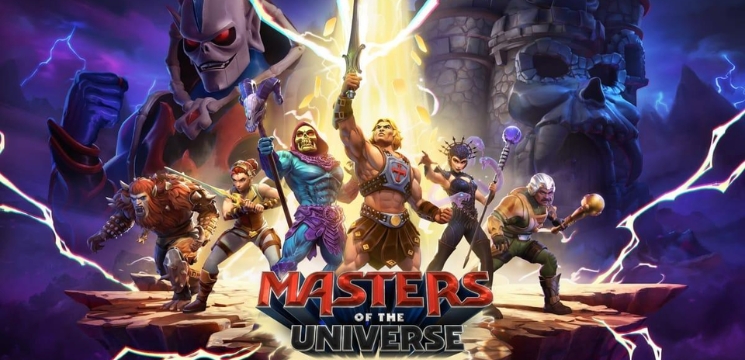
- Amazon Luna is bringing He-Man back to the spotlight with Masters of the Universe: Legends Unite, set to launch on June 5, 2026, timed perfectly with the film’s theatrical release.
- Members who hold Prime status receive the game without any charge. They bring together as many as four players and control the action with smartphones via cloud streaming.
- The month of April 2026 adds up to 20 free games for those same Prime users. This step marks Amazon’s growing focus on games that live inside a subscription model.
A Strategy Many Overlook, This Goes Beyond a Game Launch
This tactic slips past notice for many yet it moves well beyond an ordinary game release. The launch of a game together with a film can seem like basic marketing. Its true goal reaches further. Entertainment platforms begin to form in new patterns today.
Amazon picked 5 June 2026 as the date for Masters of the Universe: Legends Unite. The game appears on Luna at the exact hour the live-action film starts in American theatres. That choice carries deliberate meaning and avoids random luck. Films, games and subscriptions no longer stand separate in Amazon’s plan.
The company weaves them into a single shared moment instead. Viewers lose the usual gap that sits between seeing the story and joining it. They step from quiet watching into hands-on play right away. Such timing keeps the franchise fresh in mind for a longer stretch.
What the Game Offers, and Why Its Design Carries Weight?
Legends Unite combines roguelike deck-building systems with arcade-style mini-games at its foundation. This pairing serves a clear purpose rather than chance. Roguelike structures depend on repetition, yet they avoid monotony through variation. Each session introduces new challenges, shifting card sets, and changing progression routes.
Players return not to complete a fixed story, but to experience outcomes that feel uncertain each time. Adding arcade challenges and competitive modes shifts the experience into a shared space. The gameplay supports both cooperation and competition within the same session, which suits living room play. Up to four users can join through smartphones, while the game runs on TVs or streaming devices.
No console is required, no downloads occur, and no extra hardware enters the setup. This approach removes a barrier that keeps many casual users away from gaming. With a simple action like opening an app and using a phone, Amazon reshapes gaming into something closer to video streaming.
Inside the Gameplay, Progression, Characters, and World Structure
The game’s structure shows how it seeks to hold player interest beyond its release period. Adventure Mode lets users strengthen characters over time by collecting stronger cards. Each session feeds into long-term growth, creating continuity rather than a reset. The world splits into several biomes, each presenting its own set of challenges and risks.
Opponents include known figures such as Hordak, alongside threats like gaze-triggered enemies and shifting obstacles. A branching map system, shown in the “Evergreen” interface, allows players to select their own paths. This design replaces fixed progression with choice-driven movement. Such control increases replay value and shapes player outcomes. Characters include He-Man, Skeletor, Man-At-Arms, and Evil-Lyn, linking the experience to the franchise while connecting to the 2026 film.
Why Does This Aligns With a Larger Industry Movement?
A game linked to a film is not new on its own. The difference lies in the system supporting it. Amazon runs across several layers at once, including Prime subscriptions, Prime Video streaming, Luna cloud gaming, and device-based advertising systems. When a game launches within this structure, it depends on more than direct sales. It becomes part of an ongoing engagement cycle. Scale plays a central role here.
Prime Video reached 315 million viewers worldwide, while advertising revenue hit $21.3 billion in Q4 2025 with 23% growth. Such reach allows coordinated releases to activate large audiences at once. Fire TV devices, nearing 300 million units sold globally, support this plan by offering a built-in distribution path without extra hardware needs.
April 2026 Free Games Drop, What It Shows
While the June release attracts focus, April’s lineup reveals how Amazon maintains user involvement between larger launches. Prime members can claim up to 20 free titles this month, covering 12 PC games and eight cloud options through Luna. Two titles appeared on April 2, with more arriving each Thursday.
This schedule carries intent. Rather than releasing all content at once, Amazon spreads availability across the month. That pattern creates multiple points of return instead of a single surge. The PC list includes XCOM: Enemy Unknown Complete Pack, Total War: Pharaoh Dynasties, Neo Cab, and The Pale Beyond.
These selections span strategy and story-driven formats, reaching different player interests. Each title requires claiming before a set date, yet it remains in the user’s library after redemption even if the subscription ends. This reduces hesitation during selection. Users sense they are forming a lasting library instead of temporary access. Distribution runs through GOG, Epic Games Store, and the Amazon Games App instead of Steam, showing Amazon’s effort to build its own ecosystem.
| Release Window | Titles Arriving |
| April 2 | XCOM: Enemy Unknown Complete Pack (Very Positive – Steam) Total War: Pharaoh Dynasties (Very Positive – Steam) |
| April 9 | A Rat’s Quest: The Way Back Home (No ratings – New launch – Steam) |
| April 16 | Snake Core (Limited ratings – Steam) Monster Harvest (Mixed – Steam) Detective Agency: Gray Tie Collector’s Edition (Limited ratings – Steam) |
| April 23 | Neo Cab (Very Positive – Steam) The Pale Beyond (Very Positive – Steam) |
| April 30 | KinnikuNeko: Super Muscle Cat (Very Positive – Steam) Fantasy General (Very Positive – Steam) Pinball Spire (Very Positive – Steam) |
What the Data Shows About Its Impact?
The impact of this model becomes clearer when observing user behaviour in gaming spaces. A February 2026 study of 2,500 U.S. adults reported that 71% of mobile gamers who made a purchase after seeing an in-game advertisement did so within the same day.
Among them, 32% completed the purchase immediately after clicking. Another 39% explored options first and finished the purchase later that day. This pace shows how interactive settings shorten the distance between exposure and action. A separate study indicates that gamers spend more than non-gamers and engage more deeply with product research and exclusive offers.
Such behaviour increases the value of gaming audiences beyond size alone. At the same time, the industry continues to shift. Cloud gaming services now test ad-supported formats, including free tiers with pre-roll advertisements. Amazon takes a different route. It avoids placing ads within gameplay and instead builds engagement through subscription value while using Prime Video, Fire TV, and related systems for monetisation.
Removing Barriers, The Core Idea Behind GameNight
The GameNight format, which includes Legends Unite, tackles a basic issue that often goes unnoticed. Many people avoid buying a controller just to try a game. By using smartphones as controllers, Amazon removes that choice entirely. This shift opens access to households beyond traditional gaming users. From a behavioural view, fewer barriers increase trial. Higher trials lead to stronger engagement. That engagement then connects directly with Amazon’s wider system, including shopping, streaming, and advertising.
What These Signals for the Future?
The June 5 release reflects more than the He-Man title and points toward an emerging model. Entertainment no longer arrives in isolated formats. It now unfolds across platforms within a single engagement window. For users, this reduces barriers and allows immediate interaction.
Viewing and playing merge into one decision rather than two steps. For the industry, this marks a movement toward ecosystem-based structures instead of standalone products. Games shift from items for sale into entry points within wider networks of content, data, and user behaviour.
A Change in Perspective
It may seem like Amazon is adding a game to support a film release. That view does not capture the deeper shift. What unfolds here shows boundaries between media formats breaking down. The film exists as more than a film. The game functions as more than a game. Each serves as a point within a connected system built to hold attention, extend engagement, and lower effort for participation. With that view, the June 5 release appears less like a coincidence and more like a defined model.
