
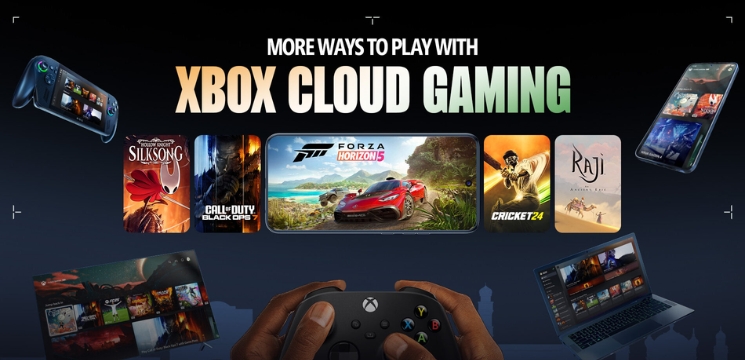
Microsoft’s approach to cloud gaming ties directly into their Game Pass ecosystem, which changes the value proposition significantly compared to competitors. Instead of streaming games you already own, Xbox Cloud Gaming bundles hundreds of titles into the subscription. It’s basically Netflix for games, but with the option to stream instead of download.
How Xbox Cloud Gaming Fits Into Game Pass
The cloud gaming component doesn’t exist as a standalone service. You need Game Pass, which now comes in three tiers: Essential, Premium, and Ultimate. All three include cloud streaming access, though the game libraries and features differ significantly.
This bundled approach makes direct price comparisons tricky. You’re not just paying for cloud access. The subscription covers game libraries you can download on Xbox consoles and PC, plus the cloud streaming option for supported titles.
The game catalog rotates somewhat regularly. Titles come and go, though Microsoft’s first-party releases stay permanently. Every game from Xbox Game Studios launches on Game Pass day one, which includes major franchises like Halo, Forza, and now Activision Blizzard titles following that acquisition.
Game Pass Essential
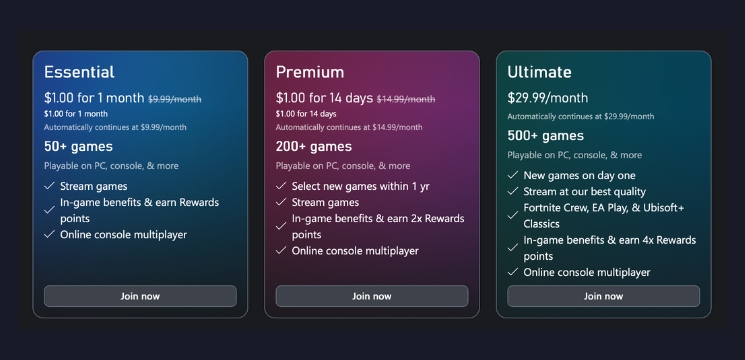
Essential tier costs $9.99 monthly and provides access to 50+ games playable on PC, console, and through cloud streaming. This entry-level option includes online console multiplayer and in-game benefits. The library is smaller than higher tiers but covers popular titles and rotates regularly.
Game Pass Premium
Premium sits at $14.99 monthly with 200+ games available. You get access to select new releases within their first year, plus all Essential features. Stream games at standard quality, earn 2x Rewards points, and enjoy expanded library access compared to Essential.
Game Pass Ultimate
Ultimate runs $29.99 monthly and includes 500+ games with new releases on day one. This top tier provides the best streaming quality, includes Fortnite Crew, EA Play, and Ubisoft+ Classics. You earn 4x Rewards points and get the complete Game Pass experience across all platforms.
What’s Actually Available Through Streaming
Over 400 games currently support cloud streaming. That’s not the entire Game Pass catalog, but most of the popular titles people actually care about are there. Big releases like Starfield, Forza Horizon 5, Sea of Thieves all stream fine.
Game Selection
Third-party support is weird and inconsistent. Some major releases work through cloud, others force you to download. There’s no clear logic to which games get streaming capability. Seems like it comes down to whatever deals Microsoft worked out with individual publishers. Kind of annoying when you find something interesting then realize it won’t stream.
They keep adding cloud support to more titles gradually. The selection has grown a lot since launch, so that trend will probably continue. Still, you need to check if specific games support streaming before assuming they will.
First-Party Advantages
Where this really pays off is Microsoft’s studio ownership. New Bethesda or Xbox Game Studios releases? Those hit cloud streaming immediately at launch. That guarantee doesn’t exist for third-party stuff, which makes planning around new releases easier for Microsoft’s own games.
Performance Across Different Devices
Xbox Cloud Gaming works on more devices than most competitors, which sounds great until you actually use it everywhere. Streaming works through web browsers on PC and Mac, dedicated apps for phones and tablets, Samsung smart TVs, even through Xbox consoles themselves somehow.
Quality caps at 1080p and 60fps currently. No 4K option yet, putting it behind services like GeForce Now’s top tier. For mobile gaming or smaller screens that limitation doesn’t matter too much. On a 55-inch TV though? Yeah, you notice the difference.
Mobile Experience
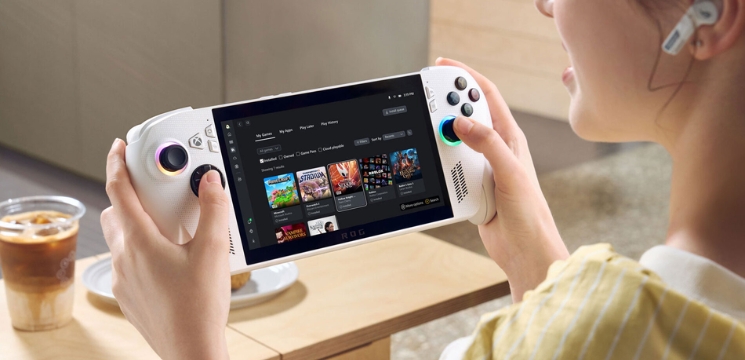
Phones and tablets actually handle this better than expected. The Xbox app works well, and pairing a Bluetooth controller basically transforms your phone into a portable console. Obviously your connection matters here, but playing full console games during a commute or hotel stay feels legitimately useful rather than just a gimmick.
Some games have touch controls, though implementation varies wildly. Certain developers did the work properly, others just slapped virtual buttons on screen that cover everything and respond terribly. Controllers remain the way to go whenever you can manage it.
Browser Performance
Being able to play through Chrome or Edge without installing anything has appeal. Jump into a game on any halfway decent computer. But browser streaming feels less stable than the apps somehow. You get more frequent stuttering or quality drops compared to playing on mobile. Not sure why that is, but it’s noticeable.
Internet Requirements and Latency
Microsoft says you need 10 Mbps minimum for 720p and 20 Mbps for 1080p. Those requirements sit lower than competitors, theoretically making this more accessible for people without gigabit connections.
Reality doesn’t quite match those numbers though. Just meeting minimum bandwidth won’t guarantee smooth gameplay. Network stability matters as much as raw speed, maybe more. Competitive multiplayer through cloud streaming still feels rough regardless of your connection quality.
Server Infrastructure
Microsoft runs data centers worldwide through Azure, which should mean good coverage for most people. Actual performance varies significantly by where you live though. Cities generally work fine. Rural areas? That’s more of a gamble with both connection quality and latency issues.
You can’t manually pick which data center to use. Everything connects automatically, which mostly works but gets frustrating when the system routes you to some distant server for no apparent reason.
The Game Pass Pricing Structure
Here’s where things get interesting from a money standpoint. If you planned to subscribe to Game Pass anyway for the game library, cloud streaming comes included across all tiers now. That’s pretty compelling.
Essential at $9.99 provides affordable entry to cloud gaming with a decent library. Premium at $14.99 expands that significantly with newer titles. Ultimate at $29.99 offers everything including day-one releases and premium streaming quality.
For someone primarily interested in cloud gaming without caring much about the downloadable stuff, Essential or Premium might suffice. Ultimate makes sense if you want the complete experience with newest releases immediately available.
Day One Releases
Microsoft’s commitment to launching first-party titles on Game Pass immediately provides substantial value, though this applies primarily to Ultimate tier. Games like Starfield retail for $69.99 at launch. Getting access through Ultimate subscription eliminates those major purchase decisions throughout the year.
Essential and Premium tiers don’t get day-one access to all new releases, which changes the value calculation. You’ll wait for newer titles to become available, though Premium gets select new games within their first year.
Where Xbox Cloud Gaming Succeeds
Integration with the broader Xbox ecosystem feels smooth when you’re already invested there. Progress syncs automatically between streaming, console, and PC versions. Start playing on your Series X, continue on your phone later, finish on a laptop that evening. It just works.
Game discovery works better here compared to services requiring separate purchases. Browse the catalog, see something interesting, jump in immediately. No purchase friction or wondering if a game justifies its price tag. Just try stuff out.
Casual gaming scenarios work particularly well. Slower-paced games, indie titles, turn-based strategy. Cloud streaming handles these without issues. The technology manages those experiences well enough that streaming versus local hardware becomes irrelevant.
Where It Falls Short
Competitive multiplayer through Xbox Cloud Gaming stays hit or miss. Fast shooters, fighting games, anything needing precise timing reveals the limitations. Local hardware still provides advantages cloud gaming can’t fully overcome yet, at least not consistently.
That 1080p cap feels increasingly outdated as competitors roll out 4K streaming. Microsoft mentions working on quality improvements but hasn’t committed to timelines for higher resolutions. Right now visual quality lags what’s possible elsewhere.
Game availability through cloud stays incomplete even within Game Pass itself. The inconsistency creates confusion, you never quite know if something will stream until checking specifically. This matters more than you’d think initially.
Who Benefits Most From Xbox Cloud Gaming?
Game Pass subscribers wanting to play in more places make up the clear target audience. Cloud gaming on additional devices costs nothing extra beyond your chosen tier.
People curious about Xbox exclusives without buying a console find obvious value. Streaming lets you experience Halo or Forza without hardware investment. If those games don’t click, canceling just loses a month’s subscription.
Essential tier works for casual gamers playing sporadically. Premium suits people wanting broader selection and newer titles. Ultimate makes sense for dedicated gamers wanting everything day one.
Less Ideal Scenarios
Serious competitive players won’t find what they need. The inherent streaming latency creates disadvantages mattering in high-level play. Those users still need local hardware realistically.
Anyone in regions with poor Azure coverage faces frustration. Geographic limitations affect all cloud gaming, but they’re particularly disappointing when the rest of Game Pass works well.
Xbox Cloud Gaming – Pros and Cons Explained
Here’s what Xbox Cloud Gaming gets right and where it falls short.
| Pros | Cons |
| Includes hundreds of games across three subscription tiers | Limited to 1080p at 60fps with no 4K option |
| First-party titles launch day one on Ultimate tier | Inconsistent third-party game support for cloud streaming |
| Works across phones, tablets, PCs, and smart TVs | Performance suffers in competitive multiplayer scenarios |
| Seamless progress syncing between devices and consoles | Ultimate tier pricing at $29.99 monthly is higher than many competitors |
| Strong game discovery with no purchase friction | Game catalog rotates with titles occasionally leaving |
The Broader Cloud Gaming Landscape
Xbox Cloud Gaming occupies an interesting market position. Not the highest quality streaming option, but that bundled game library changes everything. You’re not just evaluating cloud performance. You’re assessing the entire Game Pass package.
Microsoft’s long-term vision clearly involves cloud gaming as major infrastructure. The Activision Blizzard acquisition brought massive franchises into Game Pass, strengthening that catalog considerably. How aggressively they improve streaming quality determines whether cloud becomes central or stays supplementary.
Competition keeps intensifying. Sony launched PlayStation Plus cloud streaming, NVIDIA expands GeForce Now constantly, various smaller players keep entering. Microsoft’s advantages come from content ownership and infrastructure scale rather than pure tech superiority.
Right now Xbox Cloud Gaming serves as solid supplementary functionality within Game Pass. Won’t replace dedicated hardware for demanding users, but extends gaming access to situations and devices where consoles and gaming PCs aren’t practical. That’s valuable even if execution remains somewhat uneven across different scenarios.
