
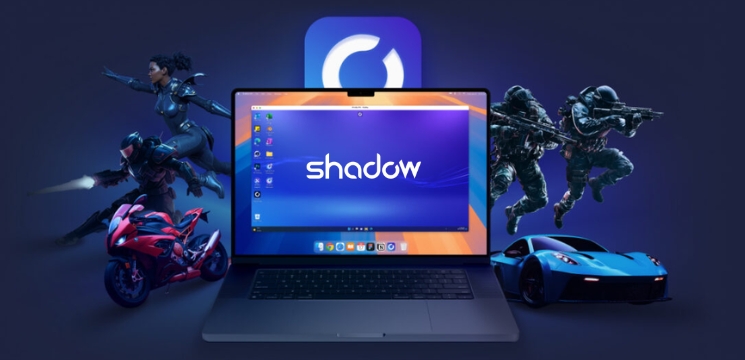
Shadow PC breaks the typical cloud gaming mold pretty dramatically. Instead of streaming games from a shared service, you’re basically renting an actual Windows PC sitting in a data center somewhere. That fundamental difference changes everything about how the service works and who benefits from it.
What Shadow PC Actually Provides
Think of Shadow PC as leasing a complete computer rather than subscribing to a game streaming service. You get a full Windows 10 installation with administrator access. Install whatever you want, Steam, Epic, GOG, emulators, productivity software, literally anything that runs on Windows.
This approach eliminates the publisher permission issues plaguing other cloud services. No waiting for games to be “supported” because you’re just installing them yourself like on any PC. Want to play something obscure from 2005? Go ahead. Mod Skyrim into oblivion? Sure, why not.
The trade-off comes in complexity and price. Shadow costs significantly more than competitors, and you need more technical comfort to get everything set up initially. It’s not plug-and-play gaming, it’s cloud computing that happens to work great for games.
Hardware Configurations
Shadow offers different tiers based on hardware specs, though availability varies by region. The base configuration starts around $29.99 monthly and includes decent mid-range components suitable for 1080p gaming.
Power Tier
The Power configuration bumps specs considerably, better GPU, more RAM, faster storage. Pricing sits around $39.99 monthly typically. This level handles demanding games at higher settings comfortably and supports productivity tasks requiring more horsepower.
Ultimate Tier
Ultimate represents the top offering when available, pushing into high-end gaming PC territory. You’re looking at $49.99+ monthly, depending on your region. For that cost you get hardware capable of 4K gaming, ray tracing, and whatever else current titles demand.
Regional availability complicates things, though. Not all tiers exist everywhere, and pricing fluctuates based on local data center capacity. The company has faced scaling challenges over the years, leading to waitlists in certain areas during high-demand periods.
Performance and Flexibility
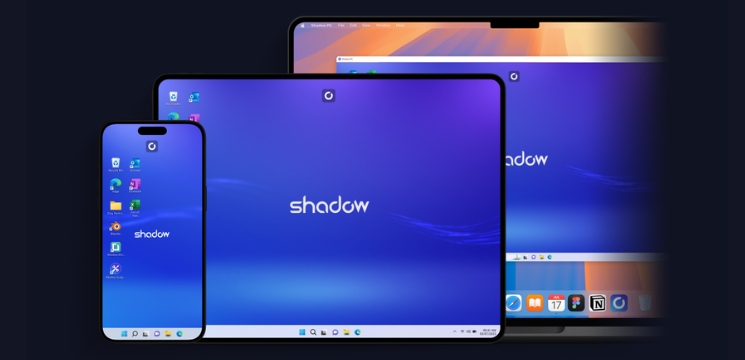
Having an actual Windows PC in the cloud provides capabilities other services can’t match. Install Discord, streaming software, custom overlays, whatever you’d run on a local machine works here. That flexibility appeals to people wanting more than just game streaming.
Game mod support deserves specific mention. Services like GeForce Now don’t allow modding at all. With Shadow, you can mod games exactly like you would locally. The Skyrim modding community alone makes this worthwhile for certain users.
Streaming quality potentially reaches 4K at 60fps on higher tiers with good connections. That puts it ahead of many competitors in raw visual capability. Whether you actually achieve those specs depends on your internet and which tier you’re subscribed to.
Latency and Responsiveness
Input lag varies significantly based on proximity to Shadow’s data centers. They maintain facilities in several regions, but coverage isn’t universal. Someone near a data center might experience latency comparable to local gaming. Someone farther away will notice delays, especially in timing-sensitive games.
The service lets you check your expected latency before subscribing, which helps set realistic expectations. If you’re showing 50ms+ during testing, competitive shooters or fighting games probably won’t feel great. Turn-based games or slower-paced titles remain perfectly playable though.
The Setup Process
Getting started with Shadow involves more steps than typical cloud gaming services. After subscribing, you’ll spend time installing launchers, games, and configuring settings. It’s basically setting up a new Windows PC remotely.
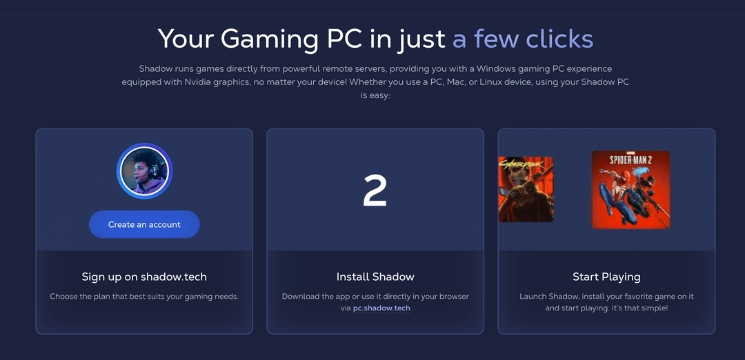
For tech-savvy users this presents no issues. You might even enjoy the customization possibilities. Less technical users could find it daunting compared to services where you just click a game and start playing immediately.
Storage management becomes your responsibility too. The included space fills up surprisingly fast with modern games often exceeding 100GB each. You can purchase additional storage, but that increases monthly costs beyond the base subscription.
Pricing Reality Check
Shadow’s pricing structure differs from competitors fundamentally. You’re not comparing a $9.99 game streaming service, you’re evaluating whether renting a cloud PC makes financial sense versus owning hardware.
At $29.99 monthly minimum, that’s $359.88 yearly. Two years runs $719.76. For that money you could buy or significantly contribute toward a decent gaming PC that you’d own outright. The math gets even less favorable at higher tiers.
When It Makes Sense
The value equation works differently for certain situations, though. If you travel constantly and can’t maintain a gaming rig at home, Shadow provides access that would otherwise be impossible. The portability aspect has real worth.
People living in small spaces or situations where a desktop PC isn’t practical might find the convenience justifies the cost. College dorm rooms, temporary living arrangements, frequent moves, these scenarios make hardware ownership more complicated.
Testing expensive PC gaming without upfront hardware investment works too. Subscribe for a few months, play through games you’re curious about, cancel if it doesn’t stick. That’s harder to do when you’ve bought a $1000+ computer.
Where Shadow Excels
The complete Windows PC experience sets Shadow apart entirely. No other cloud gaming service provides this level of control and flexibility. Installing whatever you want, modding games extensively, running multiple applications simultaneously. It’s genuine PC gaming in the cloud.
Hardware upgrade paths don’t require user intervention or purchases. When Shadow updates their data center hardware, your subscription benefits automatically. No selling old components or compatibility concerns.
Multipurpose usage beyond gaming adds value. Video editing, 3D rendering, running virtual machines, software development, Shadow handles productivity tasks alongside gaming. That versatility matters for people wanting one subscription covering multiple computing needs.
Game Compatibility
Basically everything works. If it runs on Windows, it runs on Shadow. That includes games without official cloud gaming support, obscure titles, emulators, fan games, whatever. The freedom eliminates, so many frustrations present in curated cloud services.
Where It Struggles
Cost remains the elephant in the room. At higher tiers, you’re paying what a gaming PC would cost over a few years, but never actually owning hardware. The subscription model makes sense for some situations, but not universally.
Geographic limitations frustrate potential users. Data center locations determine whether Shadow even works well in your area. Large parts of the world lack nearby servers, making the service impractical regardless of interest or budget.
Setup complexity deters casual users. If you want to click and play without thinking about Windows updates, driver issues, or storage management, Shadow demands more involvement than you might prefer.
Customer support quality has fluctuated historically. Being a smaller company means resources get stretched thin during high-demand periods. When issues arise, resolution may take longer than you’d experience with larger competitors.
Who Should Consider Shadow PC
PC enthusiasts wanting gaming access while travelling fit Shadow’s sweet spot. If you’re frequently away from home but miss your gaming rig, this provides that capability in your laptop or tablet.
Modding community members find genuine value here. The ability to mod games freely in a cloud environment doesn’t exist elsewhere really. If your Skyrim has 300 mods running, Shadow accommodates that where other services can’t.
People needing Windows PC access beyond gaming might justify the cost through multi-purpose usage. Graphic designers, video editors, programmers, if you’d benefit from cloud computing access generally, adding gaming to that equation improves the value proposition.
Poor Fits
Casual gamers wanting simple, cheap access to a few popular titles should look elsewhere. Shadow’s complexity and cost don’t match those needs. Something like Xbox Cloud Gaming or GeForce Now makes more sense there.
Budget-conscious users seeking value will struggle with Shadow’s pricing. Unless you’re extracting significant utility beyond gaming, the cost-benefit analysis favors alternatives or saving toward hardware ownership.
Anyone without solid internet infrastructure faces too much uncertainty. Shadow demands more from your connection than most cloud services due to the full PC environment. Inadequate internet makes the entire investment pointless.
Shadow PC – Pros and Cons Explained
Let’s look at what makes Shadow PC unique and where it struggles.
| Pros | Cons |
| Full Windows PC with complete administrator access | Expensive starting at $29.99 monthly minimum |
| Install any software including mods, emulators, and custom tools | Setup requires technical knowledge and time |
| No game library restrictions whatsoever | Limited data center locations affect global availability |
| Hardware upgrades happen automatically without user cost | No hardware ownership despite ongoing payments |
| Multi-purpose use for productivity beyond gaming | Storage management and Windows maintenance required |
The Future Outlook
Shadow has survived several years in a challenging market, which says something about their viability. Cloud gaming companies have come and gone, but Shadow maintains operations despite being smaller than competitors.
Their unique positioning as “PC rental” rather than “game streaming” creates differentiation that may prove sustainable long-term. They’re not competing directly with Xbox or GeForce Now , really; different use cases and user profiles.
Continued infrastructure expansion will determine accessibility for potential users in underserved regions. The company has gradually added data centers, but geographic coverage remains limited compared to massive cloud providers backing competing services.
Pricing adjustments seem inevitable as hardware costs fluctuate and competition evolves. Whether Shadow can maintain current pricing while expanding capabilities remains to be seen. For now, they occupy a niche that no other service fills quite the same way.
Shadow PC works for people who understand what they’re getting and whose situations align with its strengths. It’s not cloud gaming for everyone; it’s cloud computing that happens to be excellent for gaming when your circumstances justify the approach and cost.
