
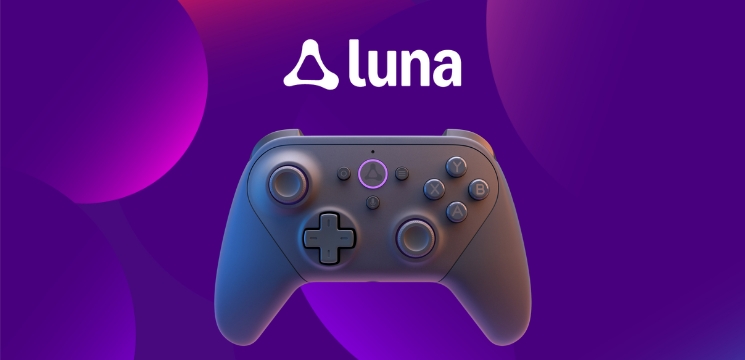
Amazon entered cloud gaming later than most competitors, launching Amazon Luna in 2020 after years of rumors. The service leverages AWS infrastructure, which should theoretically provide advantages given Amazon’s massive server presence worldwide. Reality proves more nuanced though, with Luna carving out an odd position in the market that doesn’t quite align with what most people expect from cloud gaming.
Recently, Amazon integrated Luna access directly into Prime memberships, significantly changing the value proposition for the massive Prime subscriber base. This shift makes Luna more accessible while still offering additional paid channels for expanded content.
How Luna’s Channel System Works
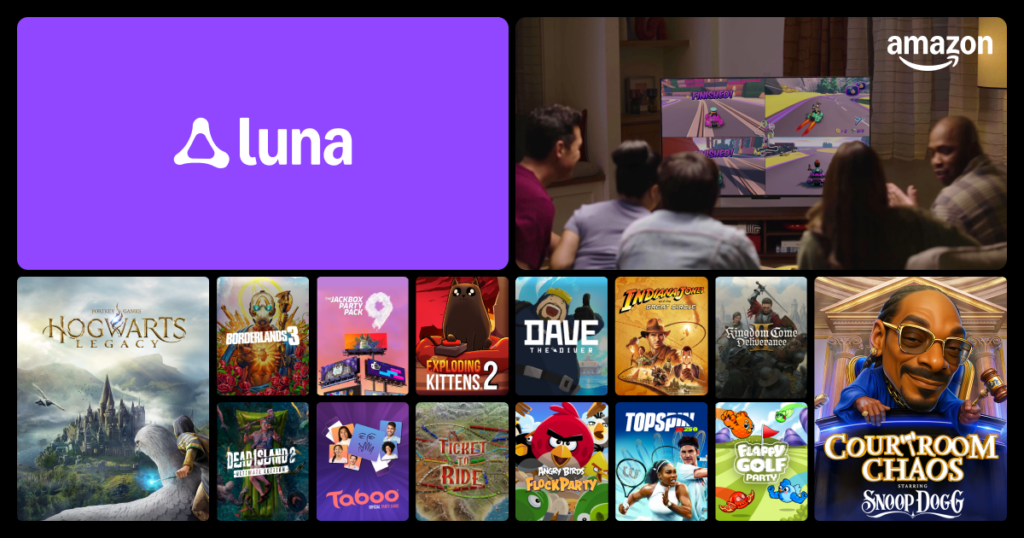
Amazon Luna uses a “channel” subscription model that differs from every competitor. Instead of one subscription covering everything, you subscribe to different channels offering specific game collections. Think of it like cable TV packages, but for games.
Prime Gaming members now get access to Luna at no additional cost beyond their Prime membership. This includes a rotating selection of games you can stream immediately. Then there’s the Luna+ channel for $9.99 monthly with 100+ games, and the Ubisoft+ channel for $17.99 giving access to Ubisoft’s catalog. A Jackbox Games channel exists for party games.
The Channel Approach
This fragmentation creates confusion honestly. Do you want to play Far Cry 6? That requires the Ubisoft channel, not Luna+. Interested in some indie titles? Those might be in Luna+ or the Prime Gaming rotation. Figuring out which channel has what becomes tedious quickly.
The concept probably made sense in Amazon’s planning meetings: offer flexibility, let users pay only for what they want. In practice it just adds friction compared to competitors with simpler, unified libraries.
Game Library and Selection
The Luna+ channel library hovers around 100-150 games typically. That’s significantly smaller than Xbox Game Pass or even what Boosteroid supports. Quality varies widely too, ranging from recognizable indie hits to games you’ve probably never heard of.
Ubisoft+ through Luna provides the best value realistically if you’re into Ubisoft titles. It’s the same subscription as standalone Ubisoft+ but integrated into Luna’s interface. You get Assassin’s Creed, Far Cry, Rainbow Six, basically their entire catalog for streaming.
Missing Major Titles
Big gaps exist in Luna’s coverage. Many popular multiplayer games aren’t available. AAA releases from publishers outside Ubisoft mostly don’t show up. The library feels curated more around what Amazon could license affordably rather than what players actually want to play.
New additions happen regularly enough, but the pace doesn’t match competitors. Months can pass without noteworthy games joining Luna+. For a service trying to establish itself, the library expansion feels surprisingly slow.
Performance and Streaming Quality
Luna streams at up to 1080p and 60fps on most devices. The 4K option exists for certain games if you’re using Fire TV devices, which conveniently pushes Amazon’s own hardware. That limitation feels arbitrary and frustrating.
Streaming quality using AWS infrastructure should theoretically excel given Amazon’s server presence everywhere. Sometimes it does, connections feel stable and responsive. Other times you encounter issues that shouldn’t exist with infrastructure this robust.
Input Lag Variability
Latency varies more than you’d expect from AWS-backed servers. Some games feel responsive enough for competitive play, others show noticeable delay even on strong connections. Whether this stems from individual game implementation or broader platform issues isn’t clear to users.
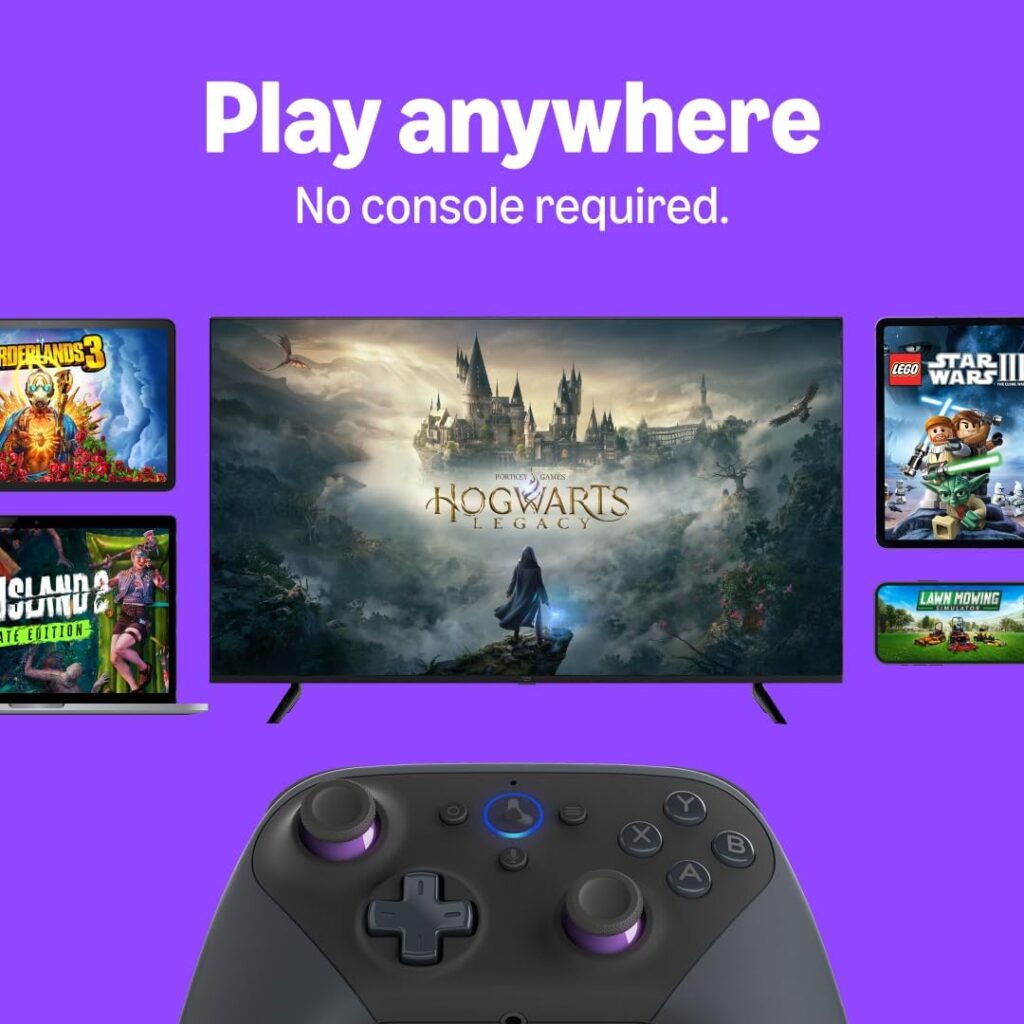
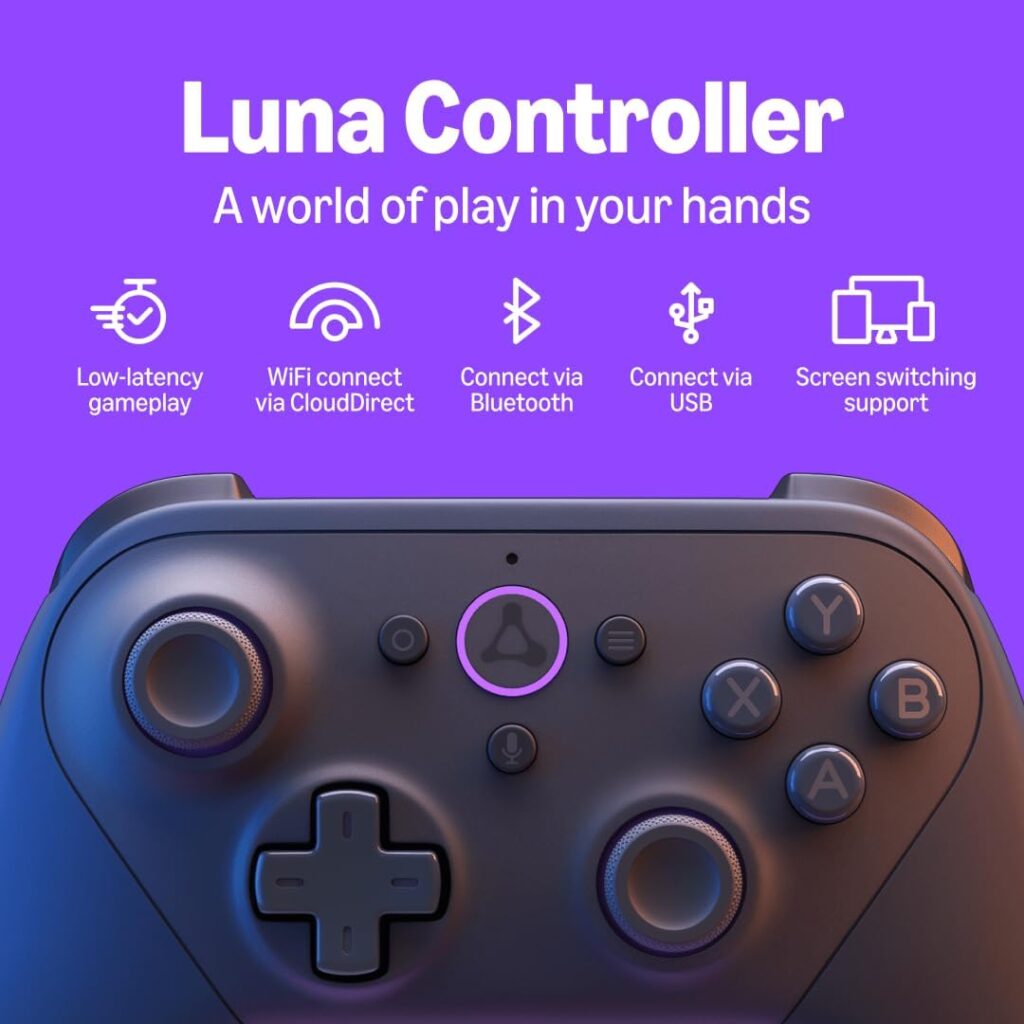
The Luna Controller connects directly to Amazon’s servers via WiFi rather than through your device, supposedly reducing latency. It costs $69.99 extra though, and whether the improvement justifies that expense depends on how sensitive you are to input delay.
Device Support
Luna works through web browsers on PC and Mac, plus dedicated apps for Fire TV, Fire tablets, iOS, Android, and Chromebooks. The Fire TV experience obviously gets priority; that’s where 4K works and where integration feels most polished.
Mobile Experience
Playing on phones works decently with the Luna Controller or other Bluetooth controllers. Touch controls exist for some games but implementation varies wildly. The mobile app functions fine without standing out particularly compared to competitors.
Fire tablets get native support, which makes sense given Amazon’s ecosystem. If you already own Fire devices, Luna integrates smoothly with those. For everyone else, there’s no compelling reason to consider Fire hardware just for Luna access.
Browser Limitations
Web browser streaming works but feels less stable than dedicated apps sometimes. Chrome and Edge handle it fine usually, Safari has occasional hiccups. Nothing deal-breaking, just noticeable that the browser experience isn’t quite as refined as what competitors offer.
Pricing Breakdown
Luna+ at $9.99 monthly sits competitively with similar services. Add Ubisoft+ for another $17.99 and suddenly you’re at $27.98 total if you want both. That exceeds Xbox Game Pass Ultimate while offering substantially less content overall.
The Prime Gaming inclusion adds some value for existing Prime subscribers. Getting a few rotating Luna games as part of Prime’s general benefits helps justify that $139 yearly cost slightly more. It’s not enough to subscribe to Prime specifically for Luna access, but it’s a nice bonus if you’re subscribed anyway.
Controller Investment
That $69.99 Luna Controller represents additional upfront cost. You can use other controllers, but Amazon pushes their hardware heavily. Whether reduced latency justifies the expense over controllers you already own seems questionable unless you’re extremely sensitive to input delay.
Where Luna Succeeds
The Ubisoft partnership provides genuine value if you’re into their games. Having basically their entire catalog streamable for $17.99 beats buying titles individually, especially for catching up on franchises you missed.
AWS infrastructure means widespread server coverage. Most regions have reasonable access to Amazon data centers, which helps maintain acceptable latency for more users globally compared to smaller competitors with limited footprints.
Prime Gaming integration adds value for the massive Prime subscriber base. Even if Luna+ doesn’t interest you, getting some free streaming games as part of Prime you’re paying for anyway is nice.
Family Sharing
Luna allows multiple user profiles under one subscription, which competitors don’t always handle well. Kids can have their own game progress, and parents maintain separate saves ; it’s a small feature that matters for household gaming.
Where It Falls Short
The channel system creates unnecessary complexity. Just give people one subscription with access to everything, or at least make the divisions more logical. The current approach frustrates more than it helps.
Library limitations hurt Luna’s competitiveness significantly. Unless you specifically want Ubisoft games, the selection doesn’t justify subscription over alternatives. Even compared to services like Boosteroid at similar pricing, Luna offers less.
4K being locked to Fire TV devices feels like artificial ecosystem lock-in. There’s no technical reason other platforms couldn’t handle 4K streaming. This decision prioritizes hardware sales over user experience.
Marketing and Visibility
Amazon barely markets Luna compared to their other services. Many people don’t even know it exists. That lack of promotion suggests uncertainty about the product’s direction internally, which doesn’t inspire confidence for potential subscribers.
Who Should Consider Amazon Luna
Ubisoft fans find the clearest value proposition. If you play Assassin’s Creed, Far Cry, and Rainbow Six regularly, Luna’s Ubisoft+ integration works well enough to consider seriously.
Prime subscribers curious about cloud gaming can explore the Prime Gaming channel at no additional cost. It’s worth trying since you’re paying for Prime regardless. If that hooks you, upgrading to Luna+ stays reasonably priced.
Fire TV owners wanting gaming on their TVs without consoles get better integration here than elsewhere. The experience on Fire devices feels most refined since that’s clearly Amazon’s priority hardware.
Poor Matches
Gamers wanting extensive libraries should look elsewhere. Xbox Game Pass, GeForce Now, even Boosteroid provide more games worth playing. Luna’s selection just doesn’t compete on quantity or quality for most tastes.
People without interest in Ubisoft games specifically struggle to justify Luna+. The base channel library doesn’t offer enough compelling titles to compete with alternatives at similar or lower prices.
Anyone expecting Amazon-level polish throughout will be disappointed. Luna works, but it doesn’t feel like a priority product the way Prime Video or AWS do. That shows in the experience.
Amazon Luna – Pros and Cons Explained
Here’s what Luna does well and where it disappoints.
| Pros | Cons |
| Now included with Amazon Prime membership at no extra cost | Confusing channel system fragments the library |
| Ubisoft+ integration provides excellent value for those franchises | Small game selection outside Ubisoft titles |
| AWS infrastructure means widespread server coverage | 4K streaming locked to Fire TV devices only |
| Family sharing with multiple user profiles | Higher combined cost if subscribing to multiple channels |
| No long-term commitment required | Minimal marketing suggests uncertain product direction |
The Bigger Picture
Luna’s position in Amazon’s strategy remains unclear honestly. They have infrastructure to dominate cloud gaming if they wanted to invest properly. Instead Luna feels like a side project that exists but doesn’t get the resources or attention needed to seriously compete.
Maybe Amazon views it as a long-term play, building slowly while the market matures. Or maybe it’s a hedge ; if cloud gaming takes off, they have a presence; if not, they haven’t invested too heavily. That uncertainty makes recommending Luna harder, since its future direction seems murky.
Competition in cloud gaming keeps intensifying. Microsoft pushes Game Pass aggressively, NVIDIA expands GeForce Now globally, Sony has PlayStation Plus streaming now. Luna needs clearer direction and better execution to remain relevant long-term against those efforts.
For now, Luna exists as a serviceable option for specific use cases, mainly Ubisoft fans and Prime subscribers curious about cloud gaming. Beyond those niches, competitors offer better value, larger libraries, or more refined experiences. Amazon has the resources to change that, but whether they will remains an open question.
