
KEY POINTS
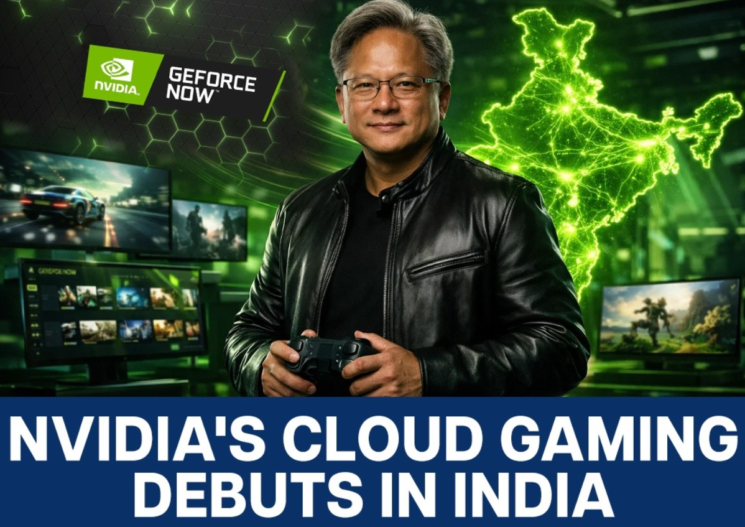
- NVIDIA GeForce NOW starts in India on April 16, 2026, in the early access public beta stage.
- Entry stays invite-only at start, users join through waitlist.
- Service lets high-end PC gaming run on low devices through cloud streaming.
For many years, gamers in India have kept hearing that cloud gaming will remove the need for costly hardware, and hope builds slowly across the community. People think once service arrives, access will open for all instantly without delay.
That belief stops here.
NVIDIA GeForce NOW launches in India on April 16, 2026, but not as a full public release, which brings mixed reactions among users. Instead, service begins with early access and an invite-only beta phase, where users must wait for approval. Users who registered before on the NVIDIA site or joined the waitlist now will get invites in steps, each of which stays valid for around one week. Access remains limited, and signing up does not promise entry at once.
This limit may create some frustration at first for many users waiting a long time. Still, it shows a deeper system truth, since cloud gaming depends on network, delay, and server load balance. By keeping the user count low at the start, NVIDIA controls performance before a wider scale.
In a simple way, fewer users now means smoother play for those who enter.
WHAT CHANGES FOR PLAYERS IN REAL USE?
At the base level, GeForce NOW changes how games run.
Instead of device hardware, games run on NVIDIA remote servers, which shifts the entire process away from the local machine. Your device acts only as a display screen, and this changes the user’s role in gaming. Inputs go to the server, processing happens there, and the video returns to the user device.
This change holds more impact than it first appears.
It means a simple laptop, phone, or TV can run demanding games, as long as the internet stays stable without a break. Barrier shifts from hardware cost to network quality, which changes how users plan gaming.
This explains why service supports many devices:
- PCs and laptops with Windows, macOS, Linux, Chromebooks
- Phones and tablets with Android and iOS
- Smart TVs and streaming devices like Samsung, LG, Android TV, Fire TV, NVIDIA Shield
- Browsers such as Chrome, Edge, Safari
- Gaming handhelds like Steam Deck, ASUS ROG Ally, Lenovo Legion Go
- VR platforms like Meta Quest and Apple Vision Pro in 2D mode
The result remains clear, gaming becomes free from one place or one system.
PERFORMANCE LEVELS DIFFER BY DESIGN
Not all users will get the same quality, and the system sets this on purpose. GeForce NOW uses many membership tiers, each of which gives a different performance level.
- Free tier gives up to 1080p at 60fps, with ads and one hour session limit.
- Performance tier gives up to 1440p at 60fps.
- Ultimate tier gives up to 4K at 240fps, or 5K at 360fps on advanced servers.
In India, pricing for these tiers is still not shared, which creates some wait among users. However, structure follows the global model, including options like day passes.
Now, the system jump becomes clear.
Ultimate tier runs on NVIDIA Blackwell RTX system, with RTX 5080-based servers. This allows features like full ray tracing and DLSS 4 Multi Frame Generation, which usually need a high-end PC.
But change stands here, users do not buy a GPU, they rent that power instead.
SERVER PLACEMENT MATTERS MORE THAN NUMBERS
High frame rate and resolution look strong, but they do not ensure a good experience alone.
Latency decides more.
NVIDIA sets up servers in Mumbai, handled by the company directly, which reduces the distance between the user and server. This cut in distance lowers ping and reduces data loss during play. This matters for fast games like shooters or competitive titles, where delay affects control. Without a local server, even a strong cloud system feels slow, and users notice lag quickly. With a local server, the play starts to feel close to the local machine’s response.
So while numbers like 360fps attract attention, real use depends on network response.
THE GAME LIST SIZE LOOKS BIG, BUT DETAIL MATTERS
GeForce NOW supports over 4,500 games, which creates a wide reach for users. Around 2,300 games are ready to play at once, while others may need to be installed through linked platforms.
This brings one key difference.
Service does not sell games, it connects to existing libraries from Steam, Epic Games Store, Ubisoft Connect, Xbox, and GOG. Service uses two ways to connect games, account linking or manual search.
- Store allows automatic sync, where users link accounts in settings, and the system scans the library then adds supported games to the My Library section. For ownership check, when the user starts the game, GeForce NOW opens a secure window of the store, the user logs in once, and the system confirms the license before the game runs on the NVIDIA server. For cloud saves, both platforms use their own cloud system, so progress moves between the local PC and the cloud.
- Pass support for some titles from the Xbox store and Game Pass list. User links a Microsoft or Xbox account, and once done, supported claimed games or purchases appear in the library. In late 2023, NVIDIA added a Sync button for Xbox, similar to Steam, which detects supported games in the account.
- Ubisoft Connect offers a deep link with a feature called Seamless Play. After the account link, the user starts games without entering the password each time. If the user has a Ubisoft+ subscription, those games also appear in GeForce NOW once the accounts connect.
- GOG.com and Battle.net often need a manual search inside the GeForce NOW app, where the user selects the correct store version of the game. GOG still does not support full library sync, but NVIDIA keeps adding more GOG titles to the support list.
READY-TO-PLAY VS INSTALL-TO-PLAY — THE LINE THAT MATTERS
The “Install-to-Play” distinction shapes how you access your library on GeForce NOW. Ready-to-Play covers around 2,300 games that sit pre-cached on NVIDIA’s servers and open the moment you click them. Install-to-Play covers the remaining 2,200+ games, most of them on Steam, where a “virtual installation” screen appears first. Because the data centre connection runs at speed, these installs finish in seconds to a minute before the game loads.
That leads to two outcomes.
- A game you already own becomes something you can stream right away.
- A game you do not own requires a separate purchase before access opens.
Users who get into the early access phase will find titles like Resident Evil Requiem, Fortnite, Counter-Strike 2, and International Edition Cricket 26 available at launch. This model pulls cloud gaming away from subscription-only ecosystems and places ownership back at the centre.
SAMSUNG TVS, GAMING HUB, AND A SHIFT THAT GOES BEYOND SCREENS
One development sits quieter than the rest but carries real weight. GeForce NOW is expected to arrive on Samsung TVs and monitors running Tizen OS through a dedicated app. That move could trigger the rollout of Samsung Gaming Hub in India a platform that brings cloud gaming services together in one place.
The absence of major cloud services held these ecosystems back in India until now. GeForce NOW entering the market begins to ease that constraint. TVs may start to function as full gaming platforms without a console attached and that shift, while subtle, points somewhere significant.
WHY DOES NVIDIA MOVE WITH CAUTION IN INDIA?
Cloud gaming success rests on three things: pricing, performance, and accessibility. Only one of those sits partially in view right now. Pricing has not been confirmed yet, and it carries the power to decide how many people actually adopt the service. Without strong local competition Xbox Cloud Gaming arrived only in late 2025. NVIDIA holds room to position itself as a service that sits at the top end.
Risk comes with that position, though.
Pricing that sits apart from local expectations could slow adoption considerably. Pricing that lands well could push cloud gaming into the mainstream in India far sooner. The invite-only rollout signals that NVIDIA understands these stakes and chooses careful control over a rushed expansion.
WHERE DOES INDIA’S GAMING FUTURE ACTUALLY GO FROM HERE?
Cloud gaming draws comparisons to Netflix, YouTube, and Spotify and the comparison holds. Each one moved content consumption away from hardware ownership and toward streaming access.
GeForce NOW reaches for the same shift in gaming.
Gaming demands real-time responsiveness in a way that video and music do not. That makes the challenge harder and ties success to infrastructure more than content alone. April 16 does not mark a finished product landing in India. It marks the start of a test whether India’s networks, pricing dynamics, and user expectations can align with cloud gaming at the scale it needs to function. If that alignment happens, what people call a “gaming setup” may quietly stop meaning what it does today.
